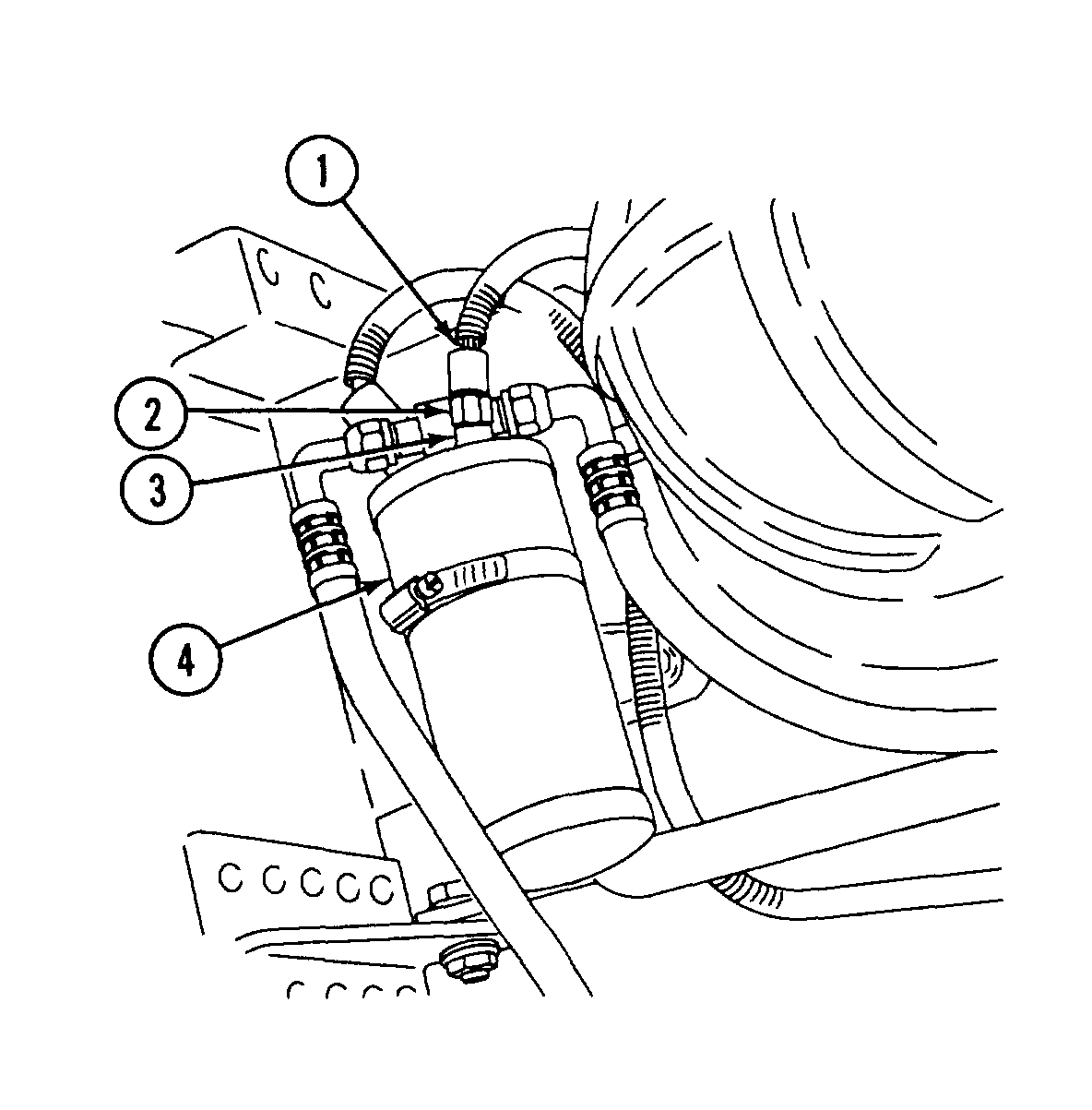
Air Conditioner Hose Replacement
TM 9-2320-363-34-1 · Chapter 11.1 — Air Conditioning System Maintenance
This task covers:      a. Removal b. Installation

Applicable Configuration:                                 Equipment Condition:
                                                          Reference              Condition Description
All except M915A2 and M916A1
                                                          TM 9-2320-363-20       Batteries Disconnected
Tools and Special Equipment:                              Page 11.1-2            Refrigerant Recovered
Tool Kit, SC 5180-90-CL-N26                               General Safety Instructions:
Shop Equipment, SC 4910-95-CL-A31
Leak Detector, 16500
Recovery and Recycling System, 34400                                        WARNING
                                                            • Use care to prevent refrigerant from
Materials/Parts:
                                                                touching your skin or eyes, because
Packing, Preformed (As Required)                                liquid refrigerant, when exposed to air,
Receiver-Drier      P/N 088335-00                               quickly evaporates and will freeze skin or
Cap and Plug Set    Appendix B, Item 7.1                        eye tissue. Serious injury or blindness
Caulk, Strip        Appendix B, Item 7.2                        could result if you come in contact with
Loctite 242         Appendix B, Item 33                         liquid refrigerant.
Oil, Refrigerant    Appendix B, Item 43.1
Tape, Insulation    Appendix B, Item 57.1                   •   Refrigerant R-134a air conditioning
                                                                systems should not be pressure tested or
References:
                                                                leak tested with compressed air.
TM 9-2320-363-10                                                Combustible mixtures of air and R-134a
TM 9-2320-363-20                                                may form, resulting in a fire or explosion,
                                                                which could cause personal injury.

                                               WARNING
                    Use care to prevent refrigerant from touching your skin or eyes,
                    because liquid refrigerant, when exposed to air, quickly evaporates
                    and will freeze skin or eye tissue. Serious injury or blindness could
                    result if you come in contact with liquid refrigerant.

1.     THE FOLLOWING AIR CONDITIONING SYSTEM HOSES CAN BE REPLACED:

        a.     COMPRESSOR-TO-EXPANSION VALVE
       b.      COMPRESSOR-TO-CONDENSER
       C.      RECEIVER-DRIER-TO-CONDENSER
       d.      RECEIVER-DRIER-TO-EXPANSION VALVE
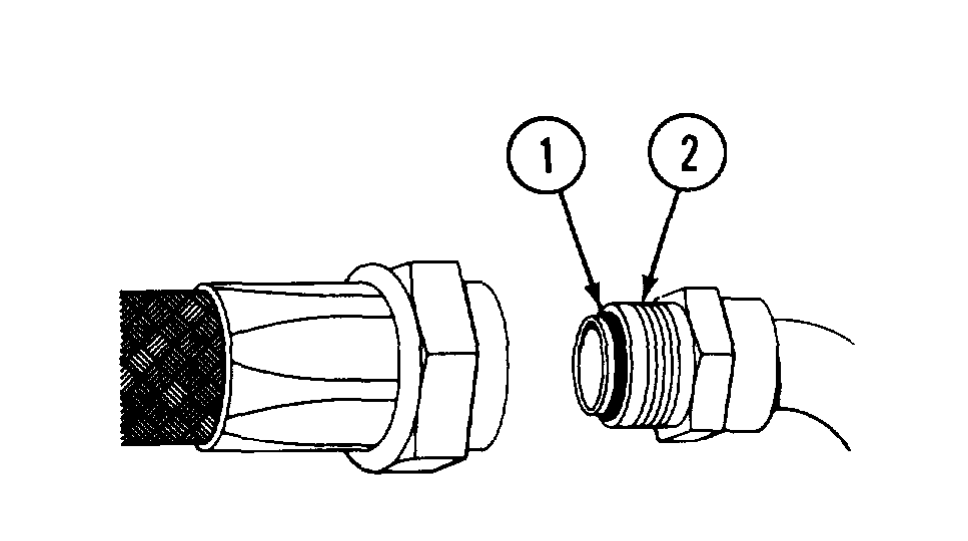
2. REMOVE INSULATING TAPE FROM EACH HOSE CONNECTION.
Do not disconnect or connect refrigerant fittings using only one wrench. Hold one fitting in place using a wrench, and turn the other fitting with a second wrench.
3. DISCONNECT EACH END OF HOSE CONNECTION.
4. CAP EACH OPENING WHERE HOSE WAS DISCONNECTED.
5. DISCARD PREFORMED PACKINGS (1).
1. INSTALL NEW PREFORMED PACKINGS (1) AND LUBRICATE THEM WITH REFRIGERANT OIL.
2. APPLY LOCTITE TO MALE FITTING THREADS (2) AND CONNECT EACH END OF HOSE.
3. TORQUE CONNECTIONS (Table D-3, Appendix D).
4. APPLY INSULATING TAPE AT EACH HOSE CONNECTION.
5. WRAP REMAINDER OF HOSE WITH STRIP CAULK.
6. REPLACE RECEIVER-DRIER (page 11.1-14).
7. SERVICE AIR CONDITIONER COMPRESSOR (page 11.1-23).
8. CHARGE SYSTEM WITH REFRIGERANT (page 11.1-2). LEAK TEST AIR CONDITIONING SYSTEM (TM 9-2320-363-20).